
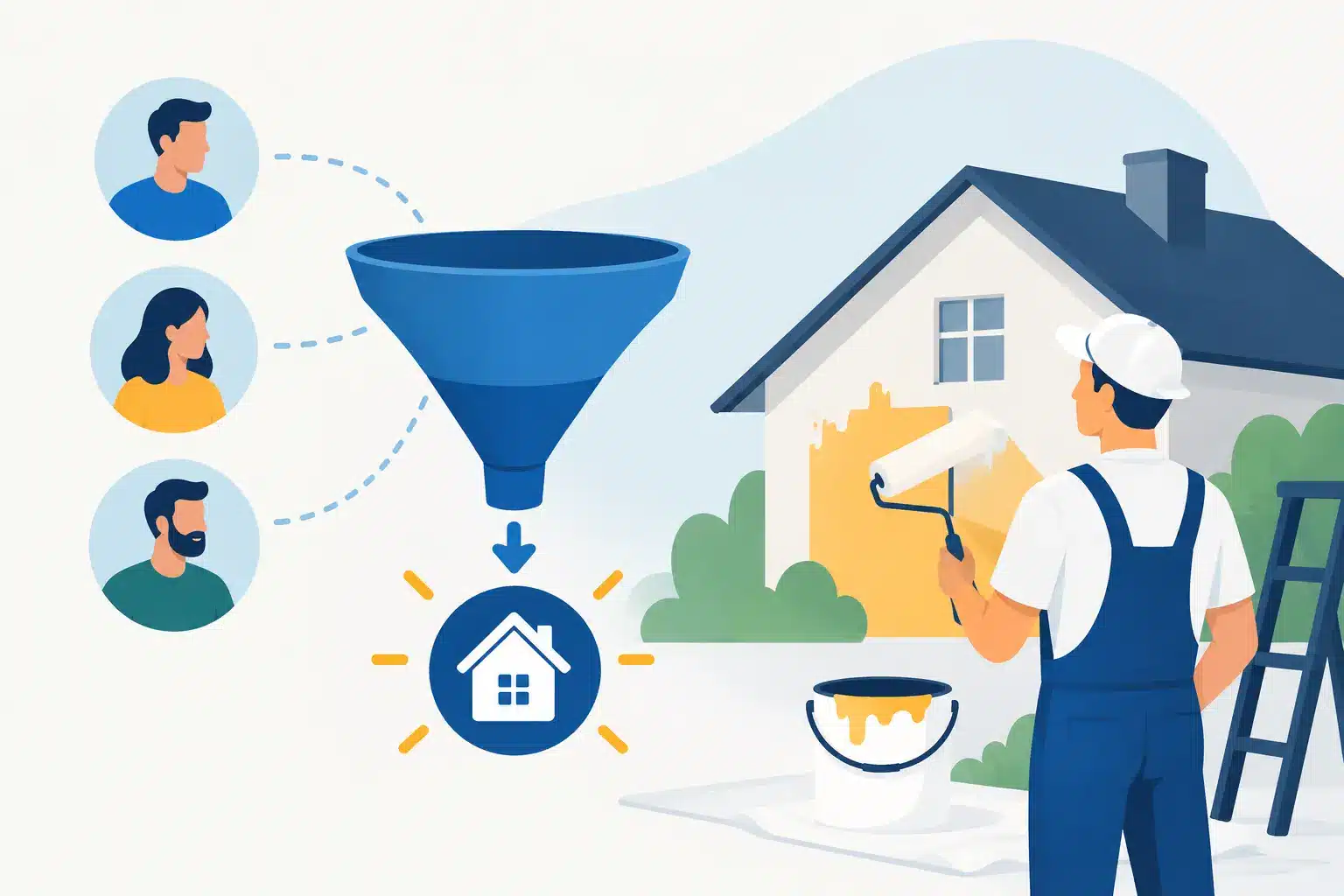
A lead notification hits your phone at 7:45 p.m. The homeowner wants three bedrooms painted, lives in your service area, and says they are ready to start next month. That is the promise behind purchased leads. But are painting leads worth buying when you factor in lead cost, missed calls, tire-kickers, bidding time, and the jobs you actually win? Sometimes. For many painting companies, though, the lead source is not the real issue. The system behind it is.
The short answer: purchased painting leads can work
Buying painting leads can produce jobs, especially when you need work quickly, are entering a new market, or have crews with open capacity. It can also become an expensive habit that keeps your sales team chasing shoppers instead of booking profitable projects.
The difference comes down to four things: exclusivity, fit, response speed, and close rate. A $40 lead that turns into a $6,000 interior repaint is a bargain. A $15 lead that gets sold to four other painters, called back two hours late, and never reaches an estimate is not cheap. It is wasted time.
Do not judge a lead provider by how many names it sends you. Judge it by how many qualified estimates and profitable jobs it produces after all costs are counted.
Why purchased leads often disappoint painters
Most complaints about lead services are legitimate, but they are not always the provider’s fault. A lead can be real and still be a poor opportunity for your company. The homeowner may only be collecting prices. Their project may be too small, outside your service area, or outside the type of work you want to take on.
Shared leads make the problem worse. If three or five painters receive the same request, the contractor who responds first has an advantage before anyone discusses prep work, coatings, scheduling, or price. By the time a busy owner-operator returns the call between jobsite visits, another company may already have booked the estimate.
There is also a quality mismatch. Some lead platforms attract homeowners looking for the lowest possible bid. That does not mean every prospect is bad. It does mean your process must quickly identify whether the project matches your minimum job size, location, scope, and timeline.
A weak follow-up process can make good leads look bad. If calls roll to voicemail, texts are inconsistent, and estimate reminders depend on someone remembering to send them, you will lose opportunities that another contractor would have won.
What a painting lead is actually worth
The right question is not, “What does this lead cost?” Ask, “What does it cost to acquire a booked job from this source?”
Start with the full cost of lead acquisition. Include the lead fee, any monthly platform fee, advertising spend if applicable, sales labor, and the time spent driving to estimates. Then track the path from inquiry to contact, contact to estimate, estimate to signed job, and signed job to collected revenue.
Here is a simple example. Suppose you buy 20 leads at $50 each. Your cost is $1,000. You contact 16 of them, book 10 estimates, and win three jobs averaging $4,500. You spent about $333 in lead cost per job and generated $13,500 in booked revenue before labor and materials.
That may be a healthy channel. But if those same 20 leads only produce one $2,500 job, your math changes fast. You have spent 40 percent of the job value on leads before accounting for production costs, sales time, or overhead. That is not sustainable for most painting contractors.
Your target cost per acquired job depends on your average project size, gross margin, overhead, and growth goals. A company focused on $15,000 exterior projects can tolerate a different acquisition cost than a company taking $1,500 touch-up jobs. Set your numbers before you buy, not after the invoices arrive.
Are painting leads worth buying for every contractor?
No. Purchased leads are usually a poor primary strategy for a painter who cannot answer calls reliably, has no clear service area, or does not have enough margin to compete on price. They can also be a bad fit for companies with a full schedule for the next several months.
They tend to make more sense when you have a defined sales process and room to add jobs. A newer company may use them to fill the calendar while building reviews and local visibility. An established company may use them selectively to support a new crew, a new service area, or a seasonal slowdown.
Commercial painting contractors need to be particularly careful. Many consumer lead platforms are built around residential projects, not property managers, general contractors, facilities teams, or bid invitations. If commercial work is your core business, generic homeowner leads may pull your attention away from more valuable relationship-based opportunities.
The source matters too. Leads from search ads, Google Local Service Ads, referral partners, and a well-ranked local website usually carry different intent than leads bought from an aggregator. Someone who searches for a painter in their city and calls your company directly has chosen you before the conversation begins. Someone who fills out a multi-contractor form may be shopping the field.
Fix your response process before increasing lead spend
Speed-to-lead is one of the few advantages you can control immediately. Aim to call new inquiries within minutes, not hours. If they do not answer, send a short text that identifies your company and gives them an easy next step. Then follow up again at planned intervals instead of treating one unanswered call as a dead lead.
This does not require an owner to stare at a phone all day. It requires a system. Calls need to be answered or returned quickly. Web forms need instant notifications. Missed callers should receive a prompt response. Estimate appointments need reminders, and unsold estimates need follow-up that is professional without being pushy.
Qualification matters just as much. Before dispatching someone for an estimate, gather the property address, project type, approximate scope, timeline, decision-maker status, and any job details that affect fit. A five-minute conversation can prevent an hour of windshield time for a project you would never take.
Use the same questions for every source. Otherwise, you cannot tell whether a lead vendor is underperforming or whether your team is handling those inquiries differently.
Track the numbers that expose bad lead sources
A dashboard full of lead counts can hide a serious problem. Track performance by source from first contact through collected revenue. At minimum, measure these numbers:
- Cost per lead and cost per booked estimate
- Contact rate within the first 10 minutes
- Estimate booking rate and estimate show rate
- Close rate by source and average job value
- Cost per won job and revenue generated per marketing dollar
Review the numbers monthly, but do not make a decision after five leads unless the quality is obviously fraudulent or far outside your targeting. Small samples can be misleading. Give a source enough volume to reveal a pattern, then cut, adjust, or scale based on profitable outcomes.
Also listen to your sales notes. If a source consistently produces requests outside your service radius or below your minimum project size, update your targeting or stop buying. If the leads are qualified but your close rate is weak, the issue may be estimate presentation, pricing confidence, review proof, or follow-up after the quote.
A better role for lead buying in your marketing mix
Purchased leads work best as one channel in a connected growth system, not as the whole plan. They can help keep crews busy while you build the assets that lower your dependence on rented opportunities: a strong Google Business Profile, local organic visibility, a conversion-focused website, a consistent review process, paid search campaigns, and referral-driven demand.
Owned demand is more valuable because the prospect contacts your company directly. You control the message, the follow-up, the reputation they see, and the data. You are not paying another platform every time a homeowner wants an estimate.
That does not mean you should refuse every paid lead opportunity. It means you should use it with a clear purpose. Set a monthly test budget, define your acceptable cost per booked job, require fast follow-up, and review results by revenue rather than lead count. Finish Coat Digital helps painting contractors connect those pieces so marketing activity turns into answered calls, booked estimates, and jobs your crews can complete profitably.
If you buy leads, buy them like a contractor making a business decision, not like someone buying a list of phone numbers. The best lead source is the one that puts profitable work on the schedule after your team has had a fair chance to do its job.