
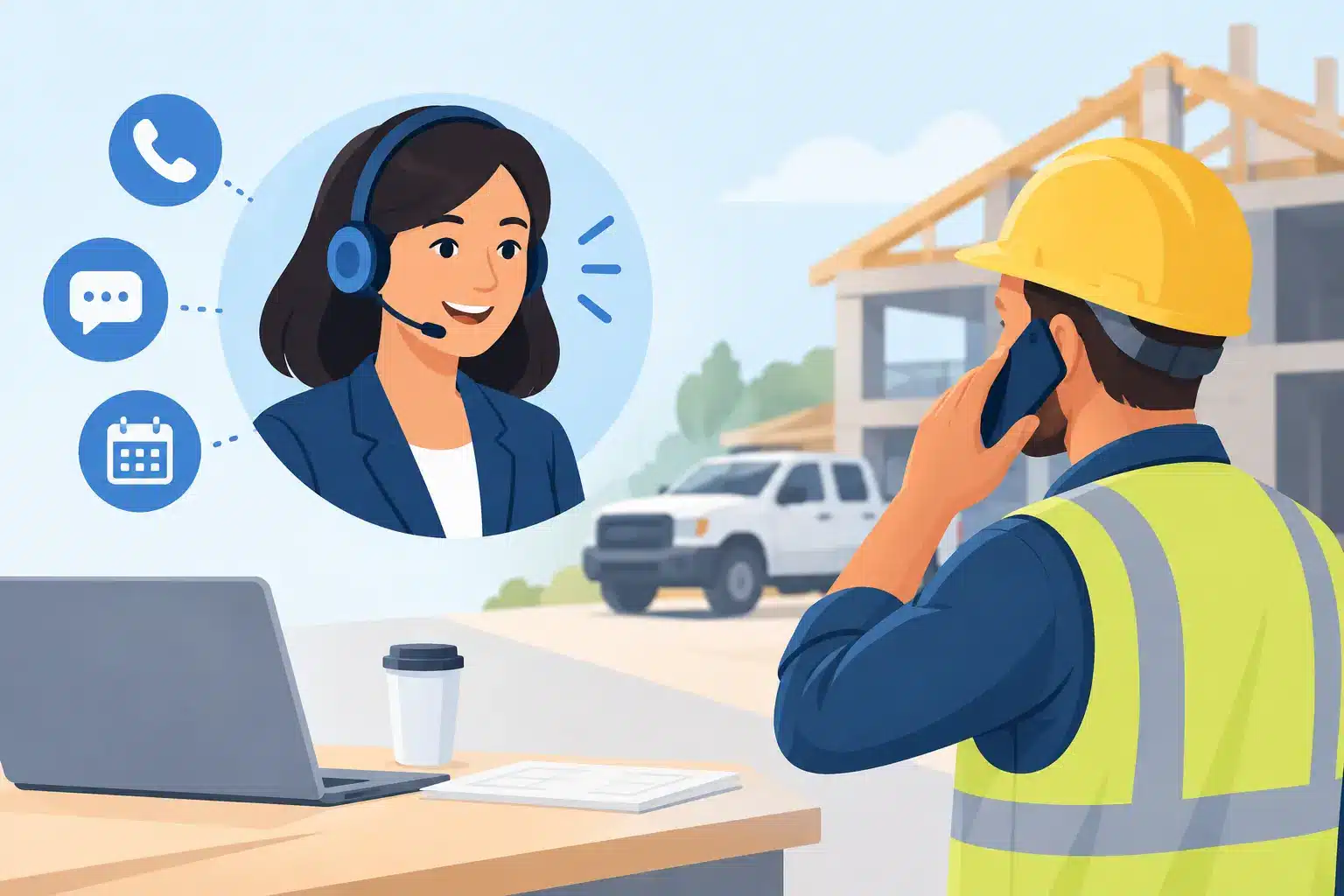
A homeowner calls at 7:18 p.m. after getting off work. They want their living room, stairwell, and exterior trim painted before family arrives next month. If nobody answers, that lead usually calls the next painter in the Google results. This AI receptionist for contractors review looks at whether automated call handling can stop that revenue leak – and what painting companies need to watch before relying on it.
For most contractors, an AI receptionist is not a magic sales system. It is a front-end coverage tool. Its job is to answer calls, capture the right details, respond to basic questions, and move qualified prospects toward an estimate without making them wait until the next business day.
That can be a major win when your owner is estimating jobs, your office manager is handling payroll, or your crew is on ladders and cannot pick up. But the wrong setup can also frustrate real prospects, collect weak lead information, and make your company sound harder to work with than the painter down the road.
What an AI receptionist actually does for contractors
An AI receptionist answers inbound phone calls using a natural-sounding voice and a script built around your business. Depending on the platform and configuration, it can answer after hours, cover overflow calls during the day, collect caller details, send text follow-ups, and either book an estimate or pass the call to a person.
For a painting company, the useful information is more specific than a name and phone number. A good system should ask what type of project the caller has, where the property is located, whether it is interior or exterior work, the approximate scope, desired timeline, and whether the caller is the decision-maker. For commercial leads, it may also need to identify the property type, bidding requirements, and project schedule.
The value is speed and consistency. A prospect who gets an answer in 10 seconds is more likely to stay engaged than one who hits voicemail. The system can also text a confirmation immediately, which gives the homeowner a clear next step and provides your team with a usable lead record.
That said, answering calls is only the first part. If the lead is not entered into your CRM, assigned to the right estimator, and followed up with quickly, the problem has only moved from voicemail to a different inbox.
AI receptionist for contractors review: where it earns its keep
The best use case is a painting company with enough call volume to miss opportunities but not enough office coverage to staff phones every hour. This often includes owner-led shops that are growing, multi-crew residential painters, and commercial contractors receiving calls while field teams are working.
It is especially effective in three situations: after-hours calls, missed-call backup, and first-response speed for marketing leads. If you run Google Ads, Local Service Ads, or Facebook campaigns, every unanswered call makes that ad spend less valuable. An AI receptionist protects the investment by making sure the prospect gets a response while intent is still high.
It also creates more accountability. Instead of guessing how many calls were missed last month, you can review call logs, lead outcomes, booking rates, and recordings. That makes it easier to find out whether the issue is lead quality, call handling, estimator availability, or follow-up.
For painters, the financial case can be simple. If your average job is $6,000 and the system helps recover one qualified estimate that turns into a job each month, it may pay for itself many times over. The numbers depend on your close rate and margins, but the principle is straightforward: missed calls are not a minor admin problem when they come from high-intent local searches.
Where AI call handling falls short
An AI receptionist should not be expected to replace a trained sales coordinator in every situation. Painting estimates are often nuanced. A homeowner may ask whether lead paint testing is needed, whether the crew can repair rotted fascia, how color consultation works, or why one quote differs from another. A scripted voice can gather the request, but it should not make promises it cannot support.
The biggest failure point is bad programming. If the AI does not know your service area, business hours, core services, scheduling rules, or minimum project size, it can waste time on poor-fit calls. Worse, it may book an estimate outside your territory or for work you do not perform, such as cabinet refinishing, pressure washing only, or a small touch-up below your minimum.
There is also a brand concern. Some callers will recognize that they are speaking with AI. That is not automatically a problem. Most people care more about getting a helpful answer than hearing a human voice at 8 p.m. But a stiff script, repeated questions, or an AI that cannot understand a simple request will hurt trust fast.
The right approach is to let AI handle the predictable opening of the call and give it a clear escalation path. A caller with an urgent issue, a complex commercial bid, an existing project concern, or a direct request for a person should be routed to the appropriate team member or given a realistic callback commitment.
What painting contractors should require before buying
Do not evaluate an AI receptionist based only on how human the demo voice sounds. Evaluate whether it fits the way your business sells work. Before you commit, make sure the system can handle these operational requirements:
- Answer with your company name and a contractor-friendly greeting, not a generic call-center script.
- Qualify leads by service area, project type, property type, timing, and minimum job requirements.
- Book estimates only into available calendar windows and account for drive time or estimator territories.
- Send an immediate confirmation text with the next step, then notify the right person on your team.
- Push complete lead details into your CRM so no one has to retype notes from a call.
- Transfer or escalate calls when the situation requires a human response.
Ask to hear real call examples, not just a polished sales demonstration. Test common painter scenarios. Call after hours as a homeowner looking for an exterior estimate. Call from outside the service area. Ask about a small repair. Ask to reschedule an appointment. Then listen for whether the system stays accurate, helpful, and on-brand.
You should also ask who owns the setup and ongoing adjustments. Your business changes. You may add crews, change your service radius, adjust minimums, or start targeting commercial repaint work. If updating the call flow takes weeks or requires chasing support, the system will become less useful over time.
Booking estimates is the real test
A receptionist system should be measured by more than answered calls. The metrics that matter are qualified calls captured, estimates booked, show rate, estimate close rate, and revenue tied back to those calls.
Start by tracking what happens to every call. Was it a new lead, an existing customer, a vendor, a spam call, or a bad fit? For new leads, did the caller receive a text? Did an estimator contact them? Was an estimate scheduled? Did the appointment happen? Did it turn into a sold job?
This is where many contractors lose the benefit of automation. The AI answers perfectly, captures the details, and sends the lead into a CRM. Then the estimate request sits untouched for four hours because nobody owns the next action. Automation cannot compensate for a sales process without clear responsibility.
Set a service-level rule for your team. For example, every qualified lead that does not book directly should receive a personal call within a defined window. The exact standard depends on your staffing, but faster is better. Homeowners often request multiple estimates within the same afternoon.
The best setup is AI plus a real follow-up system
The strongest model is not AI versus people. It is AI covering the moments your people cannot, while your team handles the conversations that need judgment and closes the opportunity.
For a painting contractor, that usually means AI answers the call, collects project details, confirms the caller’s contact information, and either books the estimate or triggers an immediate handoff. Your CRM then creates the opportunity, sends the right notifications, and starts follow-up if the appointment is not confirmed. Your estimator arrives with context instead of a vague message that says, “Call back about painting.”
Finish Coat Digital builds this kind of connected approach for painting businesses because call capture only matters when it leads to booked estimates and jobs. The phone system, advertising, website forms, CRM, and follow-up need to work as one process, not as separate tools.
An AI receptionist is worth considering if missed calls are costing you estimates or if your response time depends on whoever happens to be free. Just do not buy it for the novelty. Build it around your actual service area, qualifying rules, calendar, and sales process, then review the calls every week. The goal is not to sound futuristic. The goal is to make sure a ready-to-buy customer gets a clear, fast path to hiring your company.