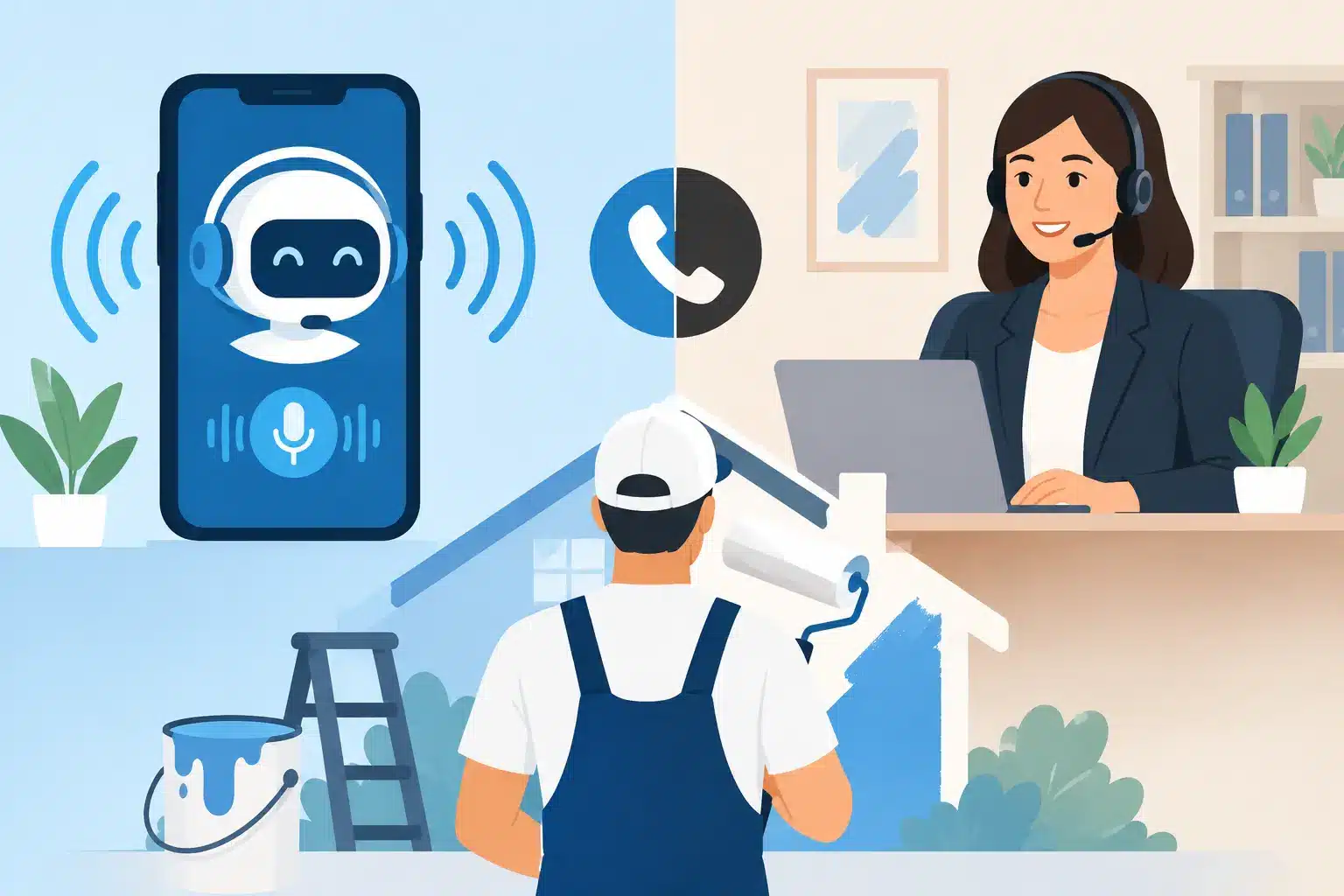
A homeowner calls at 6:18 p.m. after searching for an interior painter. If nobody answers, they usually do not wait until morning. They call the next company. That is the real issue behind voice AI vs receptionists for painting contractors: not which option sounds more impressive, but which one protects more estimate opportunities without creating a worse customer experience.
For most painting companies, the answer is not a simple choice between technology and people. Voice AI can cover the gaps that cost contractors jobs: after-hours calls, lunch breaks, crew meetings, weekends, and the moments when the office is already handling another customer. A capable receptionist brings judgment, empathy, and problem-solving that automation cannot always match.
The right setup depends on your call volume, service area, lead sources, office capacity, and the kinds of jobs you want more of.
What Happens When a Painting Call Goes Unanswered
A missed call is not just a missed conversation. It may be a $4,000 exterior repaint, a kitchen cabinet project, or a commercial property manager looking for a bid. If your Google Ads, Local Service Ads, local SEO, and referrals are generating inquiries but calls ring out, you are paying to create demand that your business does not capture.
This is especially common in painting. Owners often wear multiple hats. They are estimating jobs, checking crews, ordering materials, handling customer concerns, and trying to return calls between appointments. Even an excellent office manager cannot answer every call during peak season.
The cost is bigger than one lost lead. Slow response times make your company look harder to work with, and they push motivated prospects toward competitors who simply picked up first. A reliable call-answering system turns marketing spend into booked estimates instead of voicemail notifications.
Voice AI vs Receptionists: The Practical Difference
Voice AI answers inbound calls using a natural conversational voice. It can greet the caller, identify the service they need, gather job details, confirm their location, answer approved basic questions, and book or request an estimate appointment. It can also send a follow-up text with next steps.
A receptionist can do those same tasks while also reading the situation. They can handle a frustrated repeat customer, clarify a confusing commercial request, resolve scheduling conflicts, and make an informed decision when a caller does not fit a standard script.
The difference is availability and consistency versus human judgment.
Voice AI does not get pulled into a meeting, call out sick, or forget to log a lead. It can answer every hour of the day and keep the same intake process on every call. That matters when your business gets leads from channels that produce calls outside normal office hours.
A receptionist can build rapport in ways that matter on high-value or complicated opportunities. Commercial repaint requests, property management accounts, insurance-related work, and detailed homeowner concerns can require a real conversation before an estimate is scheduled.
Neither option fixes a weak sales process by itself. If estimates are not followed up, if availability is unclear, or if the office does not know which ZIP codes and services you want to prioritize, both an AI system and a receptionist will underperform.
Where Voice AI Works Best for Painting Companies
Voice AI is strongest when the call follows a predictable intake path. Most residential painting inquiries begin with a manageable set of questions: What needs painting? Is it interior, exterior, cabinets, or commercial? What is the property address? When would the customer like the work completed? Would they like to schedule an estimate?
For those calls, speed matters more than a long conversation. The caller wants confirmation that your company serves their area and can help. A well-configured voice AI system can collect the details your estimator needs, create the contact in your CRM, and trigger an immediate text confirmation.
It is particularly useful for after-hours coverage. Many homeowners call after work, when they finally have time to think about their project. If your office closes at 5:00 p.m., those leads should not sit untouched until the next day.
Voice AI also helps when your team is stretched thin. Rather than forcing an office manager to choose between answering the phone and processing invoices, scheduling crews, or supporting active customers, the system handles first-response calls and routes qualified opportunities to the right person.
The key is configuration. An AI phone agent needs accurate information about your service areas, job minimums, available services, estimate process, office hours, financing policies if applicable, and escalation rules. Generic answers make a company sound generic. Painting-specific call handling makes it useful.
Where a Receptionist Still Wins
Do not treat AI as a substitute for judgment in every situation. A receptionist is often the better choice for calls that require trust, context, or immediate decision-making.
A homeowner may call upset about a recent project. A property manager may need certificates of insurance, a site walkthrough, prevailing wage information, or a fast response to a maintenance issue. A repeat customer may want to speak with the person who knows their history. Those calls should reach a trained human quickly.
Receptionists also play an important role in sales follow-through. They can confirm an estimate the day before, call no-shows, coordinate with estimators, and follow up personally after a proposal is sent. Those activities require attention to timing and context, not just call answering.
For a larger painting company with steady office volume, a receptionist can become a revenue-producing role when they are trained to protect calendars, qualify leads, confirm appointments, request reviews, and keep estimates moving. The problem is not hiring a receptionist. The problem is expecting one person to provide perfect coverage every minute of every day.
The Best Model Is Usually Hybrid
For many contractors, the strongest answer to voice AI vs receptionists is a hybrid model. Voice AI handles immediate coverage and routine intake. Your office team handles escalations, high-value conversations, active customer issues, and sales follow-up.
That division gives callers a fast response without pretending every conversation should be automated. It also lets your staff spend less time repeating basic intake questions and more time on tasks that require a person.
A practical workflow might look like this: voice AI answers first, confirms whether the caller is a new lead or an existing customer, collects basic project information, and either books an estimate or creates a callback task. Calls involving complaints, large commercial opportunities, unusual requests, or questions outside the approved knowledge base are transferred or flagged for immediate human follow-up.
Every outcome should be logged in the same CRM. If your calls, texts, form submissions, estimate reminders, and review requests live in separate systems, leads will still fall through the cracks. The phone answer is only the first step. The workflow after the call determines whether it becomes revenue.
How to Decide What Your Business Needs
Start with your actual call data, not assumptions. Review how many calls come in each week, when they arrive, how many are missed, and how long it takes your team to respond to voicemails and web leads. Listen to a sample of recorded calls if your phone system allows it.
Then separate calls into categories. New residential leads, commercial bid requests, existing customer questions, vendor calls, hiring inquiries, and spam should not all follow the same path. This is where a thoughtful setup outperforms a basic answering service.
You should also calculate the value of recovered opportunities. If voice AI helps you save even a few qualified estimate calls each month, compare the cost to the gross profit from one additional job. For most established painting contractors, that math is more useful than comparing the monthly cost of software to the hourly wage of a receptionist.
Watch the quality, not just the answer rate. A system that answers 100% of calls but captures incorrect details, overpromises availability, or frustrates customers is not doing its job. Track estimate bookings, show rates, qualified lead rate, response time, and booked revenue by source.
Set the System Up to Win
Whether you use voice AI, a receptionist, or both, define the process before turning anything on. Decide which services you want to promote, the areas you will serve, the information required before an estimate is booked, and the calls that need immediate escalation.
Give callers a clear next step. If they book, send a confirmation text with the appointment time and what to expect. If they need a callback, tell them when they will hear from someone. If they are outside your service area or below your job minimum, handle it professionally without tying up your estimators.
At Finish Coat Digital, the goal is not to add another tool for the sake of it. The goal is to build a connected lead system where ads, local visibility, call handling, follow-up, and estimate booking work together.
The right phone strategy should make one thing true: when a qualified prospect is ready to talk about painting their property, your company is ready to respond.