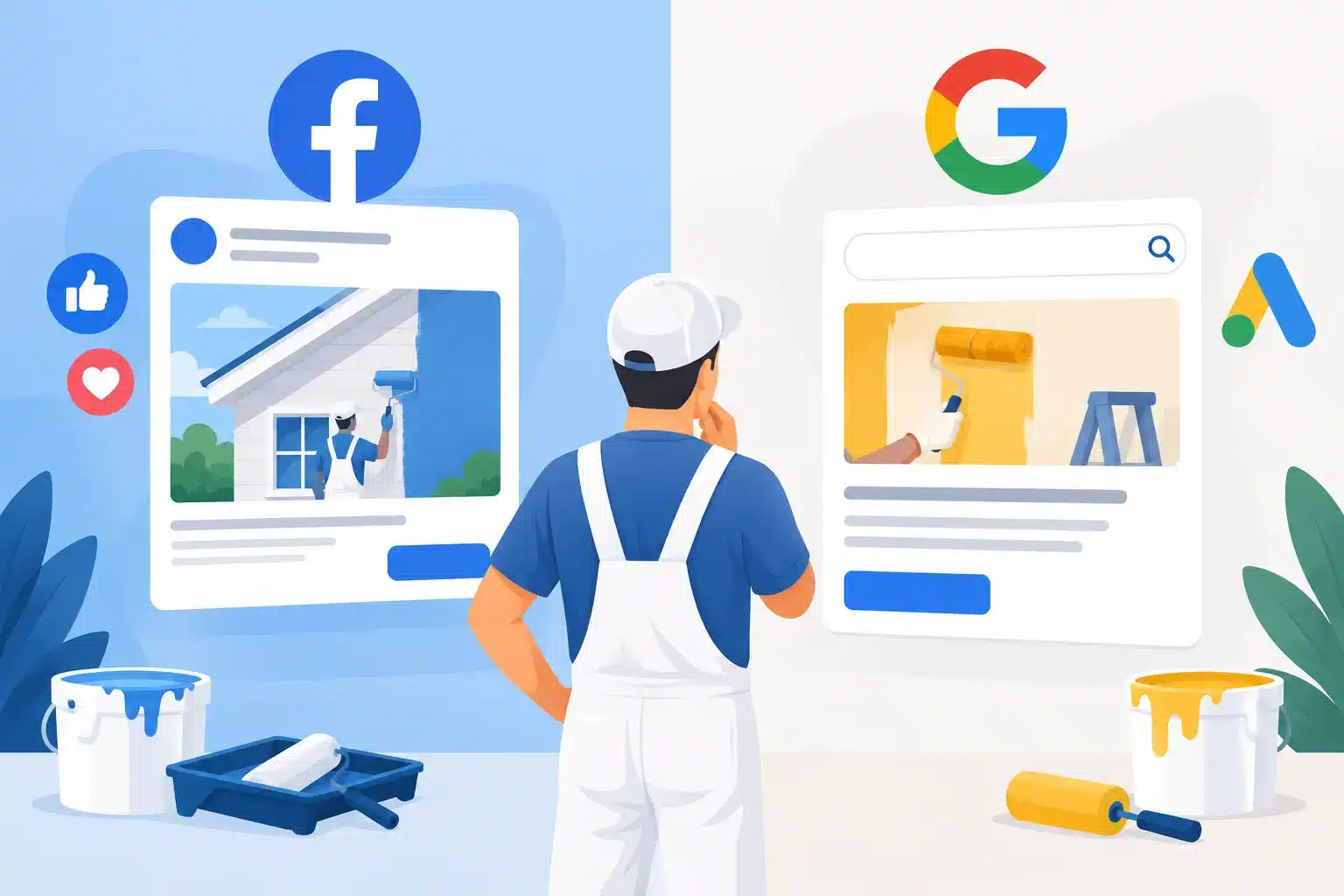
A homeowner who searches “interior painter near me” is already looking for help. A homeowner scrolling Facebook may not have thought about repainting the living room until they see a sharp before-and-after photo. That difference drives the whole Facebook ads vs Google ads painters decision.
For most painting contractors, Google Ads produces the fastest path to estimate requests because it captures demand that already exists. Facebook and Instagram Ads can create demand, build recognition, and keep your company in front of homeowners who are not actively searching yet. The better channel is not always one or the other. It depends on your market, season, capacity, sales process, and how reliably your team follows up.
The mistake is treating either platform like a lead faucet. Ads can generate calls and form submissions. They cannot answer a missed call, confirm an estimate, or turn a quote into a signed job. Those outcomes require a connected marketing and follow-up system.
Google Ads for Painters: Best for High-Intent Leads
Google Ads works when people have a problem and are ready to solve it. They may need exterior painting before listing a home, cabinet refinishing before a remodel wraps up, or commercial repainting before a tenant moves in. They search, compare companies, and often call quickly.
That makes Google Ads a strong choice when your immediate goal is to keep estimators busy and crews scheduled. Search campaigns can target service-specific and location-specific terms such as “house painter in [city],” “cabinet painting near me,” or “commercial painting contractor.” The message can match the search: exterior painting, interior repaints, drywall repair, or whatever work you want more of.
The trade-off is cost and competition. In larger metro areas, painting keywords can be expensive, especially during peak season. A click does not guarantee a lead, and a lead does not guarantee an estimate. If the landing page is weak, the phone is unanswered, or the inquiry receives a reply the next morning, your cost per booked estimate rises fast.
Google Ads also requires discipline. Broad keywords can pull in job seekers, DIY questions, paint product searches, and customers outside your service area. A focused campaign uses the right locations, service terms, negative keywords, call tracking, and conversion tracking. Otherwise, the budget gets spent without a clear picture of which campaigns are creating real opportunities.
When Google Ads should get the larger budget
Google should usually lead the budget when you have available production capacity, a defined service area, and a team that can respond to new inquiries quickly. It is especially effective for contractors targeting urgent or high-value services, including exterior painting, cabinet painting, commercial maintenance work, and prep-heavy repaint projects.
It also works well alongside Local Service Ads and local SEO. Those channels put your company in front of people who are already searching. Google Ads can fill gaps where organic rankings are still developing or where you need more estimate volume now.
Facebook Ads for Painters: Best for Creating Demand
Facebook and Instagram Ads reach homeowners based on geography, demographics, interests, and behavior. People are not typing “painter near me” into their feed. They are watching videos, checking neighborhood updates, or looking at photos from friends. Your ad has to earn attention before it earns a lead.
That is why creative matters more here. Generic stock images and vague promises like “quality painting at a fair price” rarely create momentum. Strong campaigns show the finished result: a dated kitchen transformed with cabinet paint, a tired exterior with fresh curb appeal, or a clean living room after a color update. The offer needs to be clear, too. A seasonal exterior-painting consultation, a free color consultation with a booked estimate, or a limited service-area campaign gives homeowners a reason to act.
Facebook can generate leads at a lower upfront cost than search, but those leads may be less ready to buy. Some people want an idea of price, are planning months ahead, or submit a form while comparing several contractors. That does not make Facebook a bad channel. It means speed-to-lead and lead nurturing matter even more.
If a homeowner submits a Facebook lead form at 7:30 p.m., an automated text confirmation and a fast call the next morning can make the difference. Without that workflow, the lead cools off and the contractor concludes that Facebook “does not work.” Often, the platform produced an opportunity. The process failed to capture it.
Where Facebook Ads can outperform search
Facebook and Instagram can be particularly useful when you want to build a pipeline before demand peaks. An exterior campaign launched before spring can create awareness with homeowners who know they need paint but have not started searching. Retargeting campaigns can also keep your company visible to people who visited your website, watched your videos, or engaged with a previous ad.
The platform is valuable for visual services. Cabinet refinishing, exterior transformations, specialty finishes, and higher-end residential work all give you compelling creative to show. It can also support hiring campaigns when you need painters, foremen, or subcontractors, though customer lead generation and recruiting should be tracked separately.
Facebook Ads vs Google Ads for Painters: The Real Decision
The simplest way to think about the two platforms is this: Google captures existing demand, while Facebook creates and nurtures demand. If your calendar has openings next month and you need estimate opportunities now, prioritize Google. If you want to stay visible in your local market, build future pipeline, and show off the quality of your work, add Facebook.
For a growing painting company, the best answer is often a staged approach. Start with the channel closest to revenue: high-intent Google search traffic. Make sure calls are answered, forms receive immediate responses, estimates are scheduled, and every lead source is tracked. Then layer Facebook and Instagram campaigns on top to retarget visitors, promote visual proof, and generate additional demand.
Budget should follow capacity, not ego. There is no benefit to generating 80 leads if your estimator can only run 15 appointments and nobody follows up with the rest. A smaller campaign with strong response times and disciplined sales follow-up will beat a larger campaign that floods an unprepared office.
What Makes Either Platform Profitable
Advertising results cannot be judged by clicks, impressions, or cheap leads alone. The numbers that matter are calls answered, qualified conversations, estimates booked, estimates completed, jobs won, and revenue generated. If you only measure cost per lead, you can end up scaling the cheapest leads instead of the most profitable jobs.
A profitable system starts before the ad launches. Your service areas need to be clear. Your website or landing page needs proof, service detail, reviews, project photos, and a simple path to call or request an estimate. Your CRM needs to record the source of each inquiry. Your team needs alerts, automated texts, and follow-up tasks so leads do not sit untouched.
Then comes the sales side. A homeowner who receives a fast, professional response is more likely to book. A prospect who does not book immediately should receive useful follow-up instead of disappearing from the pipeline. After the job, a review request helps strengthen future Google visibility and gives your next ad campaign more proof to work with.
This is where specialized systems matter. Finish Coat Digital approaches advertising as part of the full path from local visibility to lead capture, estimate booking, review collection, and revenue. The ad channel is only one part of the machine.
A Practical Starting Point for Painting Contractors
If you are choosing one platform today, start by answering three questions. Do you need leads immediately? Can someone answer or return calls within minutes? Do you have enough project photos, reviews, and follow-up process to make Facebook leads convert?
If immediate demand and fast response are in place, Google Ads is usually the first move. If your company already has dependable lead handling and wants to expand local awareness, Facebook and Instagram can become a strong second engine. If both channels are live but results feel inconsistent, do not assume the ads are the problem. Check call handling, response time, estimate scheduling, and whether closed jobs are being tied back to the original campaign.
The contractor who wins is not necessarily the one spending the most. It is the one that responds first, follows up consistently, shows credible proof, and knows exactly which marketing dollars are producing booked work. Build that operating system first, and both Google and Facebook become far easier to scale.