
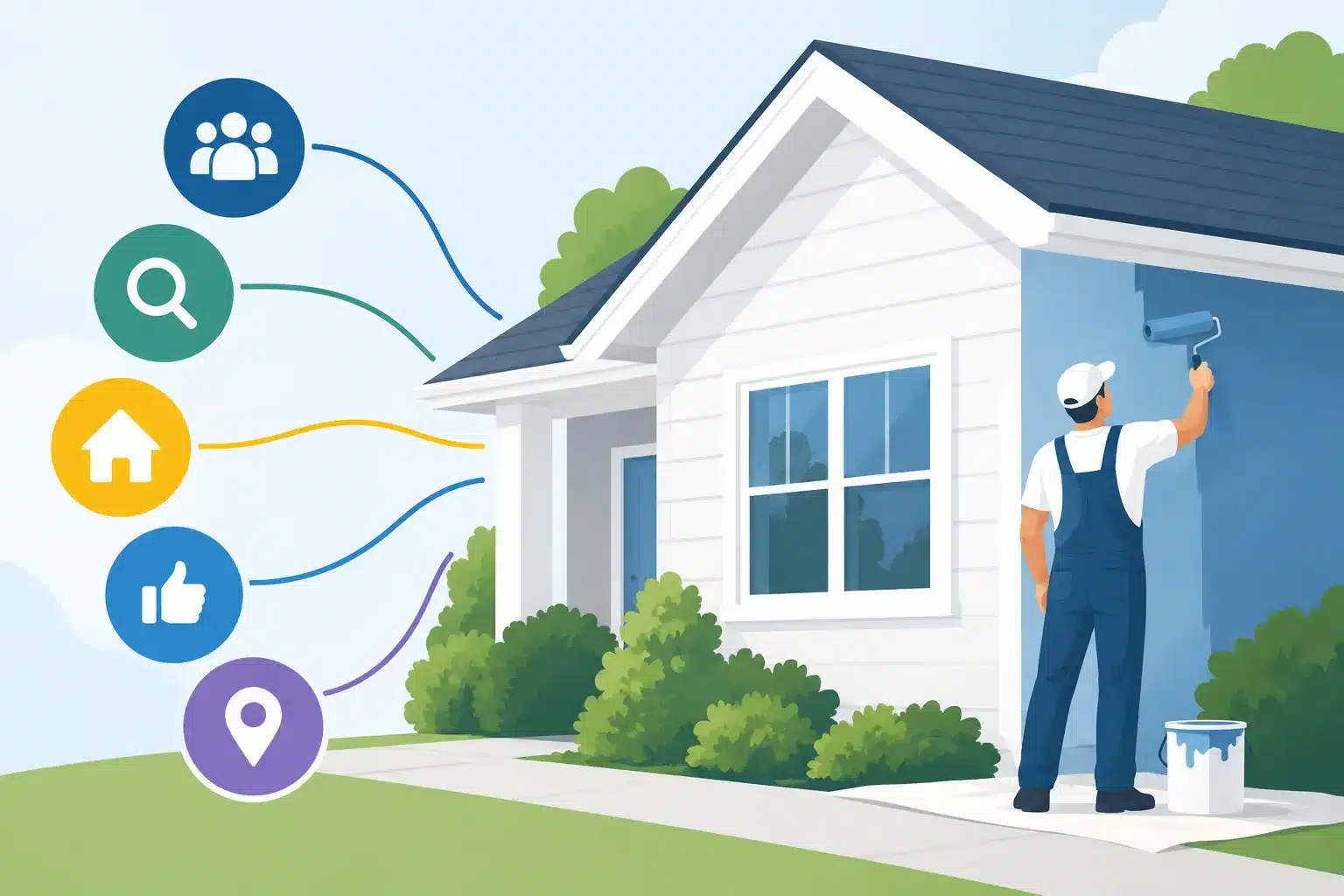
A homeowner searching for a painter at 7:30 p.m. is not looking for a marketing strategy. They want to know who can quote the job, show up when promised, and do clean work. That is why residential painting lead sources cannot be judged by lead count alone. The source matters, but what happens after the call, form submission, or message matters just as much.
A painting company can buy plenty of inquiries and still have an empty schedule if calls go unanswered, estimates take days to book, or follow-up stops after one voicemail. The best lead plan combines high-intent channels with a process that captures, contacts, and converts every opportunity.
Start With the Lead Sources Closest to a Booked Estimate
Not all leads carry the same value. A homeowner who searches “interior painters near me” is usually much closer to hiring than someone who sees a before-and-after photo while scrolling Facebook. Both can produce jobs, but they should be treated differently in your budget, follow-up, and expectations.
For most established painting contractors, Google should be the foundation because it captures demand that already exists. Social advertising, referral campaigns, and neighborhood visibility then create demand and keep the pipeline from relying on one channel.
The goal is not to be everywhere. The goal is to build a few reliable sources, track the cost and quality of each, and put fast follow-up behind them.
The Best Residential Painting Lead Sources for Contractors
Google Local Service Ads
Local Service Ads can put your company at the top of local search results when homeowners are actively looking for painters. They work well because the buyer intent is high, and the call or message usually comes from someone ready to discuss a project.
The trade-off is that leads can be expensive in competitive markets, and not every contact will be qualified. Some homeowners are collecting prices, outside your service area, or looking for work that does not fit your minimum project size. Your team still needs to answer quickly, verify the job details, and book the estimate while interest is high.
Track more than cost per lead. Watch cost per booked estimate, estimate show rate, and closed revenue. A higher-priced lead source can be the better investment if it produces larger repaint projects and stronger close rates.
Google Business Profile and Local SEO
Your Google Business Profile and local organic rankings generate some of the strongest long-term leads because homeowners often trust companies they find naturally in the map results. A complete profile, consistent photos of real projects, accurate service areas, regular updates, and a steady flow of reviews all support visibility.
Local SEO takes longer than paid ads. It is not the right answer when you need the phone ringing this week. But it reduces dependence on paid lead costs over time and gives homeowners more proof before they ever contact you.
For a painting company, location matters. A contractor ranking well across the towns where crews actually work will usually beat a broad strategy targeting an entire metro area with no local relevance. Build visibility around the neighborhoods, cities, and services that produce profitable jobs.
Google Search Ads
Google Search Ads give you control over when and where your company appears for high-intent searches. They are especially useful for services with clear demand, such as cabinet painting, exterior house painting, interior repainting, and commercial repaint work.
The strength of search ads is speed. You can launch campaigns, control service areas, set budgets, and direct homeowners to pages built around the exact service they need. The weakness is waste when campaigns are not managed carefully. Broad keywords, poor location settings, and weak negative keyword lists can spend money on DIY searches, job seekers, or people far outside your ideal market.
Ads also need a landing page that earns the next step. A generic homepage with a buried contact form will cost you estimates. Give homeowners clear proof, service details, recent work, reviews, a prominent phone number, and an easy estimate request.
Reviews and Referral Systems
Referrals remain one of the most profitable residential painting lead sources because trust is already built into the introduction. A neighbor, past client, realtor, or contractor has done some of the selling for you. These leads often close at a higher rate and are less price-sensitive than cold leads.
The mistake is treating referrals as something that just happens. Build a process that asks satisfied clients for a review shortly after the final walkthrough, then makes it easy for them to recommend you. Keep a record of referral sources so you know which clients, neighborhoods, and partners regularly send work.
Reviews also do double duty. They help local rankings and give paid leads the confidence to contact you. A company with current, detailed reviews and project photos has a major advantage over a painter with an outdated profile and no proof of recent work.
Facebook and Instagram Advertising
Facebook and Instagram are not usually the best place to find a homeowner urgently searching for a painter. They are effective for creating awareness, showcasing transformations, and generating opportunities from people who have been putting off a project.
This channel works best with strong creative. Real before-and-after projects, exterior transformations, cabinet finishes, and homeowner testimonials outperform generic stock images and vague claims. The offer should also be specific. “Get a free estimate” is fine, but an exterior painting consultation before the busy season or a limited number of cabinet painting slots can give people a reason to respond now.
Expect more education and follow-up from social leads. Many will not be ready to schedule immediately. Automated text and email follow-up, paired with a real phone call, keeps your company in front of them without relying on a salesperson to remember every inquiry.
Neighborhood Visibility and Local Partners
Every finished project can create the next one. Yard signs, wrapped vehicles, door hangers where permitted, and a disciplined neighbor outreach process can turn job sites into local lead generators. The key is timing. Reach nearby homeowners while your crew is already working in the area and the proof is visible.
Partnerships can create another steady source. Realtors, property managers, remodeling contractors, flooring installers, and restoration companies regularly encounter clients who need painting. These relationships take time to earn, so lead with reliability. Show up, communicate clearly, protect the partner’s reputation, and make their client look well served.
Lead Sources That Need Extra Caution
Third-party lead marketplaces can fill gaps, especially for a newer company, but they come with real trade-offs. Leads may be sold to multiple painters, price shoppers can be common, and you have less control over the customer experience before contact.
Use these sources only when you know your numbers. If your team can respond in minutes, qualify firmly, and close efficiently, the channel may be profitable. If leads sit for hours or estimates are not followed up, buying more shared leads only creates more waste.
Avoid measuring a source by the number of notifications it generates. Ten low-quality contacts that consume office time can be worse than three qualified estimates from Google or referrals.
Turn More Inquiries Into Estimates
The conversion system is what separates a busy painting company from one that is simply paying for attention. Every source should flow into one place, whether that is a CRM, a tracked call system, or a properly managed inbox. If you cannot see where a lead came from and what happened next, you cannot improve it.
Speed matters. Call new leads as quickly as possible, ideally within minutes during business hours. If the call is missed, an automated text can acknowledge the inquiry and set the expectation that someone will follow up. That is not a replacement for a real conversation. It is protection against losing the homeowner to the next painter who answers.
Your office staff should qualify consistently. Ask about project type, location, timeline, approximate scope, decision-makers, and whether the work fits your minimum. Then offer a clear next step: a scheduled estimate with a defined arrival window and confirmation reminders.
Track the full path from source to revenue: lead received, contact made, estimate booked, estimate completed, proposal sent, job won, and revenue collected. This shows where the real problem sits. Sometimes the issue is lead quality. More often, it is a missed call, a slow response, an unconfirmed estimate, or a proposal that never receives a follow-up call.
Finish Coat Digital approaches lead generation as a connected system because no channel can make up for broken follow-up. The contractor who knows which sources create profitable jobs, answers fast, and follows every estimate through will outgrow the company that chases the cheapest lead.
Choose the channels that fit your market and crew capacity, then make every inquiry accountable. More leads are useful. More booked estimates from the right homeowners are what keep the schedule full.