
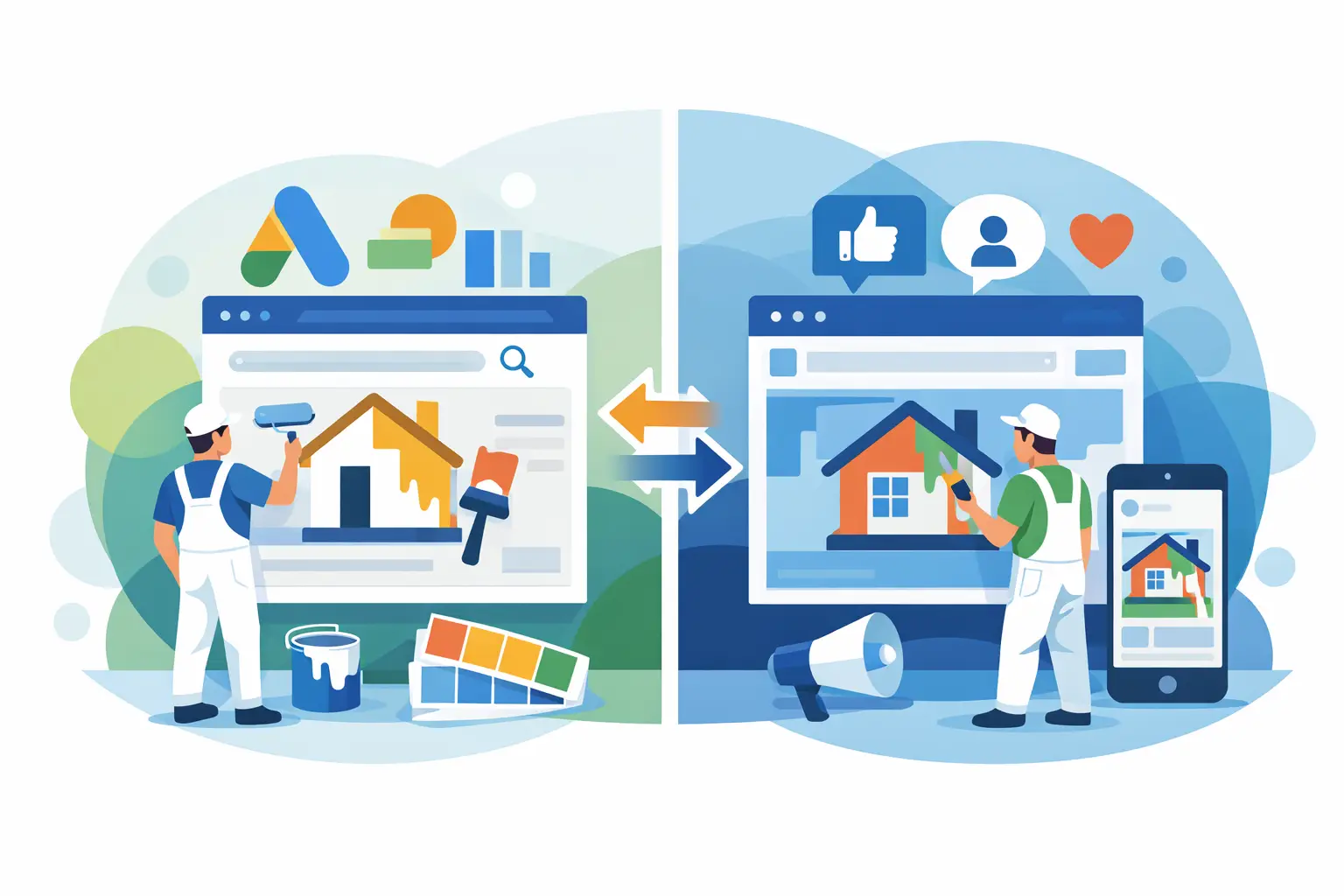
A homeowner with peeling exterior trim rarely opens Facebook to find a painter. They go to Google, type “house painters near me,” and start calling. That difference in buyer behavior is the foundation of google ads versus facebook ads for painting contractors. One platform captures demand that already exists. The other creates demand before a homeowner starts searching.
Neither platform is automatically better. The right choice depends on your service area, your current lead flow, your sales process, and whether your team can respond quickly enough to turn inquiries into booked estimates. The mistake is treating both channels as interchangeable lead machines.
Google Ads versus Facebook Ads: The Core Difference
Google Ads is intent-driven. Someone searches for “interior painters in [city],” “cabinet painting estimate,” or “commercial painting contractor.” They have a problem, a project, or a deadline, and they are actively looking for a company to hire. Your ad puts your business in front of that person at the moment they are evaluating options.
Facebook and Instagram ads are interruption-driven. People are looking at photos, checking local updates, or watching videos when your ad appears. They may own a home that needs painting, but they were not necessarily planning to request an estimate that day. Your ad needs to earn their attention, make the project feel timely, and give them a simple reason to respond.
For a painting company that needs estimates on the calendar now, Google Ads usually has the stronger starting point. For a company that wants to build a pipeline ahead of a slower season, promote a high-margin service, or stay visible in a defined neighborhood, Facebook can be a valuable second channel.
When Google Ads Makes Sense for Painting Contractors
Google Ads is built for capturing high-intent local searches. This is where a homeowner searches after noticing water stains, selling a house, planning a renovation, or deciding that the exterior cannot wait another year. The prospect is closer to action, which often means a better chance of booking an estimate.
That does not mean every Google lead is great. Broad keywords can create expensive clicks from people seeking paint supplies, DIY advice, jobs, or companies outside your service radius. Campaign structure matters. A painting contractor should separate services and locations instead of running one generic campaign for every possible search.
Interior painting, exterior painting, cabinet refinishing, commercial work, and specialty coatings all attract different customers. They also deserve different ad copy, landing pages, and qualification questions. If exterior repaint jobs are your priority, your budget should not disappear into low-value searches for touch-ups or unrelated services.
Google Ads works especially well when these operational pieces are in place:
- Your phones are answered during business hours and after-hours calls receive an immediate text response.
- Your landing page makes it easy to call or request an estimate without hunting for basic details.
- Your service area, license information, reviews, and project photos build trust quickly.
- Your estimator can contact new leads within minutes, not the next morning.
A missed call from a Google ad is not just a missed lead. It is money spent to hand a motivated homeowner to the next painter who answers.
Google Ads Costs More Per Click, But Intent Matters More
Google clicks can be expensive in competitive markets. That is normal. The number that matters is not the click cost alone. It is the cost per qualified estimate and, ultimately, the cost per won job.
A $25 click that turns into a $9,000 exterior repaint is far more valuable than a $5 social lead that never returns a call. Track calls, form submissions, estimates scheduled, estimates completed, and closed revenue. Without that data, it is easy to optimize for cheap leads instead of profitable work.
Where Facebook and Instagram Ads Can Win
Facebook and Instagram are strong visual platforms, which makes them useful for painters. Before-and-after transformations, cabinet refinishing reveals, fresh exterior color changes, and short videos of a clean, professional crew can stop the scroll better than generic ad copy ever will.
These ads work best when the offer is specific. “We are painters who do quality work” is not an offer. “Book your exterior painting estimate before spring schedules fill up” gives homeowners a reason to act. The same applies to cabinet painting, HOA work, seasonal exterior projects, and commercial repainting campaigns.
Facebook can also help when Google search volume is limited. In a smaller market, there may not be enough people searching each month to keep a Google campaign fully productive. Social ads give you another way to reach homeowners within selected zip codes, neighborhoods, or service-area radiuses.
The trade-off is lead quality. Facebook lead forms are easy to submit, which can increase volume but also produce people who are only mildly curious. Some prospects will use an old phone number, skip your calls, or request pricing with no real project timeline. That does not make Facebook ineffective. It means the follow-up system has to be tighter.
Facebook Leads Need Faster, More Persistent Follow-Up
A Facebook lead cools off quickly. If a homeowner submits a form while scrolling on the couch, they may barely remember doing it an hour later. Call quickly, send a short text, and continue follow-up with useful reminders rather than one voicemail and silence.
The first message should be simple: thank them, confirm the service they requested, and offer two estimate windows. Avoid sending a long paragraph or asking five questions before making contact. The goal is to start a conversation and get the estimate booked.
Automated text and email follow-up protects your ad budget when your crew is on job sites. It does not replace a real person, but it prevents new inquiries from sitting untouched while the homeowner keeps looking.
How to Choose the Right Budget Mix
If your company needs immediate estimate opportunities, start by putting most of the paid media budget into Google Ads. This is particularly true if you serve a populated market, have strong reviews, and can answer calls consistently. Google lets you compete for homeowners who are already searching for a painter.
Once your Google campaigns are producing qualified estimates and your follow-up process is reliable, add Facebook and Instagram to create more demand. A practical starting mix for many residential painting companies is 70 to 80 percent Google and 20 to 30 percent Facebook. That is not a universal rule. A cabinet refinishing company with strong visual content may invest more in social, while a commercial contractor may lean heavily toward search and targeted outreach.
Seasonality should influence the mix too. Before exterior season, social ads can build awareness and fill an early pipeline. During peak demand, Google often deserves more budget because active searches rise and your schedule has limited capacity. If your production calendar is nearly full, you may shift messaging toward higher-ticket jobs, future scheduling, or recruiting rather than chasing every possible lead.
Do Not Judge Either Platform by Lead Count Alone
Lead count is a vanity metric when no one knows what happened after the form submission or phone call. A campaign that produces 40 leads but only three estimates can be weaker than one that generates 15 leads and 10 scheduled appointments.
Measure the full path from ad to revenue: calls answered, forms contacted, estimates booked, estimates run, jobs sold, average job value, and cost per acquired customer. This is where many painting businesses lose visibility. Their ads may be working, but missed calls, slow follow-up, or a weak estimate process are draining the return.
Finish Coat Digital approaches paid advertising as part of a connected growth system, because ad performance cannot be separated from the website, CRM, call handling, review profile, and sales follow-up behind it. More inquiries only help if your operation is built to capture them.
The Best Choice Is the One Your Team Can Convert
Google Ads can put high-intent homeowners in front of you. Facebook Ads can keep your company visible, showcase your work, and create demand before competitors enter the picture. The stronger channel is the one matched to your goals and supported by a process that responds fast, qualifies properly, and keeps following up.
Start with the customer you need most, the jobs you want more of, and the gaps in your current pipeline. Then build the advertising and follow-up system that gives every good lead a real chance to become a booked job.