
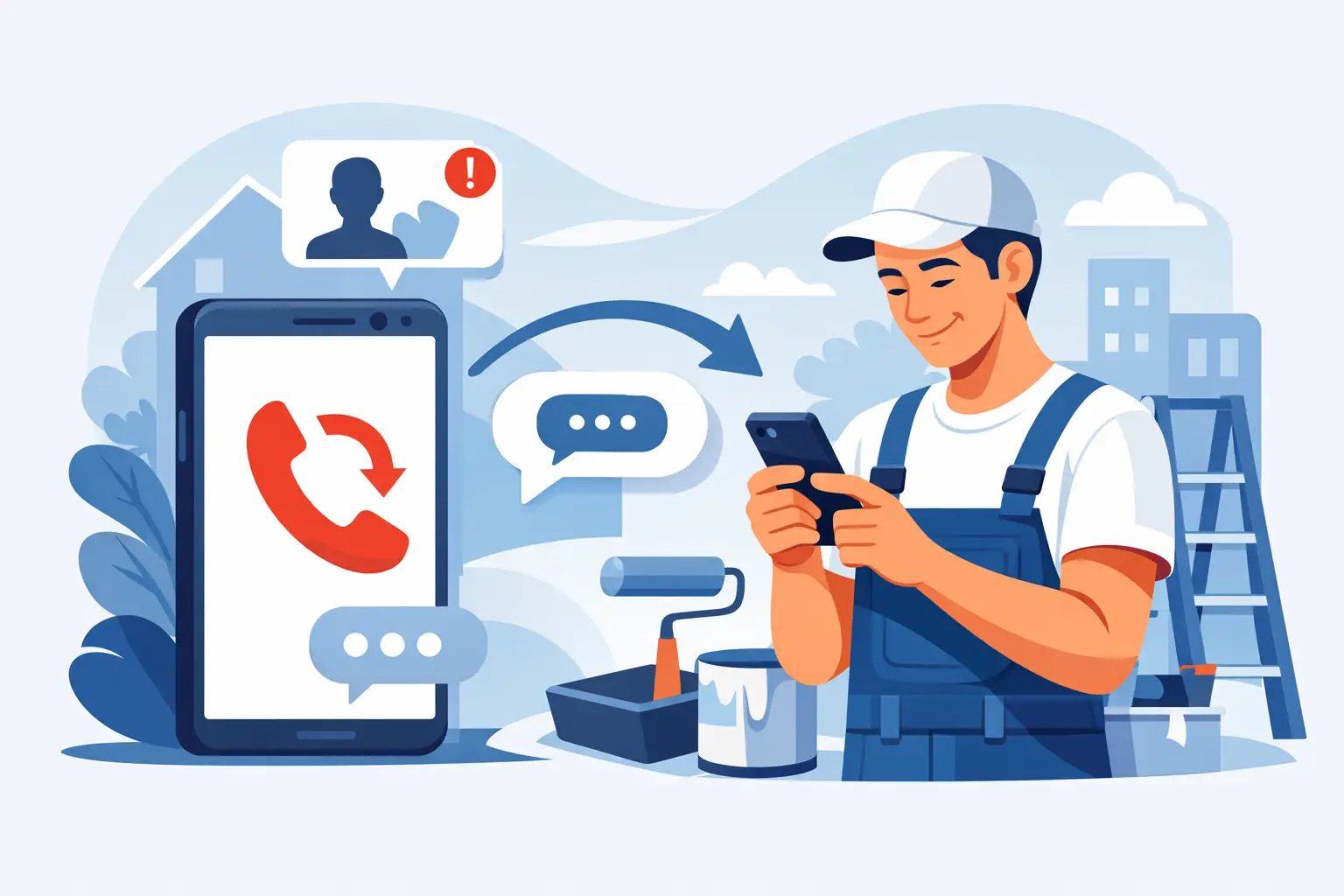
A homeowner calls at 12:17 while your estimator is on-site, your office line rings out, and by 12:19 they are already calling the next painter. That is exactly why missed call text back for painters matters. If you are paying for Google Ads, Local Service Ads, SEO, yard signs, or referrals, every unanswered call is a lead you already spent money to generate.
For painting contractors, speed matters more than most people realize. A missed call is not just a communication issue. It is a sales leak. When someone wants an exterior quote, cabinet repaint, or commercial repaint proposal, they usually contact two or three companies in a short window. The first contractor to respond often gets the estimate. The one who waits until the end of the day gets silence.
What missed call text back for painters actually does
A missed call text back system sends an automatic text message when your business misses an inbound call. Instead of letting that lead disappear into voicemail, the system replies right away with a short message that confirms you received their call and gives them a simple next step.
For a painting company, that message might say you are on a job site, ask what kind of painting project they need, and offer to schedule an estimate. It keeps the conversation alive while your team is working. That is the real value. It buys you time without making the lead feel ignored.
This works especially well for owner-operators and smaller teams who cannot keep a dedicated office person on the phone all day. It also helps larger companies during peak season when call volume spikes and the front desk cannot catch every inquiry.
Why painters lose leads without it
Most painting companies do not have a lead problem as much as they have a response problem. They invest in visibility, get the phone to ring, then lose opportunities because no one answered in time.
A lot of missed calls happen for normal reasons. You are climbing a ladder, meeting a property manager, driving between jobs, or talking to another prospect. None of that means the lead was bad. It just means your process was weak.
The problem gets worse when your marketing starts working. More leads can expose more gaps. If your Google Business Profile improves or your ad campaigns pick up, unanswered calls increase unless your follow-up system improves too. That is why missed call text back is not a nice extra. It is part of lead handling.
The business case is simple
If one missed call per week turns into one extra booked estimate per month, and one of those estimates becomes a job, the system usually pays for itself quickly. For many painting contractors, one interior repaint or exterior project covers months of automation costs.
But the bigger gain is consistency. Instead of depending on whether someone happened to be free when the phone rang, you create a standard response every time. That makes your sales process more reliable.
There is a trade-off, though. An automated text is not the same as a real conversation. It should not replace live phone answering when that is possible. It should back up your team when they miss a call, not become an excuse to stop answering phones well.
What a good missed call text looks like
A lot of contractors get this wrong by trying to sound too polished or too generic. The text should sound like a real business, not a chatbot written by a software company.
For painters, a strong missed call text back message is short, direct, and tied to the next step. It should confirm the missed call, identify the company, and invite a reply. Something simple often works best: thanks for calling, sorry we missed you, what kind of painting project are you looking to get quoted?
That one message does a few jobs at once. It reassures the lead, starts qualification, and opens the door to booking. If you want to tighten it further, you can ask whether the project is interior, exterior, residential, or commercial.
What you do not want is a long paragraph, too many questions, or anything that feels canned. People ignore texts that look like automated marketing. They respond to clear, human messages.
Where missed call text back fits in your sales process
Missed call text back for painters works best when it is connected to the rest of your lead pipeline. If the text goes out but no one follows up after the lead replies, you have only moved the problem one step down the line.
The right setup should log the call, trigger the text, capture the lead in your CRM, and notify your team to respond fast. From there, the process should move toward estimate scheduling, reminders, and post-estimate follow-up.
This is where many painting businesses hit a wall. They add one tool for texting, another for forms, another for reviews, and another for ads. The result is fragmented follow-up and no clear accountability. A connected system works better because every lead is tracked from first contact to booked job.
When this matters most for painting contractors
Some companies benefit from this more than others. If you mostly work from repeat clients and have low inbound call volume, the gain may be modest. But if you rely on Google leads, local search, paid ads, or heavy seasonal demand, the upside is much bigger.
It matters most when calls come in after hours, during job-site hours, or on weekends. A lot of residential prospects reach out during lunch breaks, after work, or while comparing contractors at night. If your process says call us during business hours and leave a voicemail, you are making it easy for them to move on.
Commercial painting leads can be different. Property managers and facility contacts may prefer phone first, but they still value fast acknowledgment. A quick text can hold the opportunity until your estimator calls back with the right details.
Common mistakes painters make with automation
The first mistake is treating automation like a replacement for discipline. If your team takes three hours to answer a text reply, the initial speed advantage disappears.
The second is sending a message that is too broad. If the text says only we missed your call, let us know how we can help, you may get fewer replies than if you mention painting directly. Specificity helps people answer.
The third is failing to measure outcomes. Do not just look at how many texts were sent. Look at contact rate, estimate bookings, and closed jobs tied to missed-call recovery.
The fourth is ignoring opt-in and communication settings. Your setup needs to be compliant and configured properly. This is not the flashy part, but it matters.
How to know if your system is working
Start with your missed call volume. If your company misses 20 calls a month, even a modest recovery rate can create real revenue. Then look at how many of those callers text back, how many conversations become estimate appointments, and how many estimates turn into work.
You should also listen for operational signs. Are fewer leads slipping through the cracks? Is your office spending less time chasing cold voicemails? Are estimators showing up to more qualified appointments? Those are strong indicators that the process is doing its job.
For many contractors, the hidden value is not just more leads saved. It is cleaner operations. Better response handling reduces chaos, improves scheduling, and gives you a more accurate picture of marketing performance.
The bigger point: marketing only works if follow-up works
A lot of agencies sell painters on lead generation and stop there. That is only half the job. More calls do not automatically mean more revenue if your business cannot capture and convert those calls.
That is why missed call text back belongs in a growth system, not as a random add-on. When it is paired with strong local SEO, paid lead flow, CRM tracking, estimate scheduling, and review generation, you stop thinking in terms of isolated tactics. You start building a machine that turns attention into booked work.
For painting contractors, that is the difference between being busy and being organized. Finish Coat Digital approaches this the right way because the goal is not simply more inbound activity. The goal is more estimates booked, more jobs won, and fewer dollars wasted on leads that went unanswered.
If your phone is ringing and work is still inconsistent, do not assume the problem is lead volume. Sometimes the fastest path to more revenue is answering the opportunities you already paid to create.

